By Rinki Pandey December 21, 2025
Credit indicators are becoming less important, and financial institutions are more and more are relying on the behaviour-based model, which takes into account the actual financial activities. The duration of trends in the bank balance and the nature of cash flow have become the determining factors for judging the borrower’s credit. Approval-lift signals from 3-month vs 6-month bank averages allow the lenders to look at the short-term financial momentum and the medium-term stability in one analytical framework.
The dual-timeframe perspective is a valuable tool for identifying borrowers with three categories of people – those who are improving, those who are consistent, and those who are about to be or already experiencing financial stress. Moreover, instead of depending exclusively on historical credit scores—which are oftentimes outdated and slow to reflect the actual behaviour—lenders are now evaluating the bank’s average performance metrics to get a better picture of the applicants’ inflows, outflows, and liquidity management over time.
The patterns that these insights uncover are usually the disciplines of spending, consistency of income, and the ability of cash flow to resist dips, among others, which the traditional models rarely pick up. Consequently, analyzing the rate of loan approval becomes more accurate, and similarly, the financial institutions’ capability of approving more loans without excessively increasing the risk goes up. This new tactic is in line with the current financial risk assessment trends, which emphasize the importance of being up-to-date, being able to explain, and using behaviour-driven data.
Understanding Approval-Lift Signals from 3-Month vs 6-Month Bank Averages
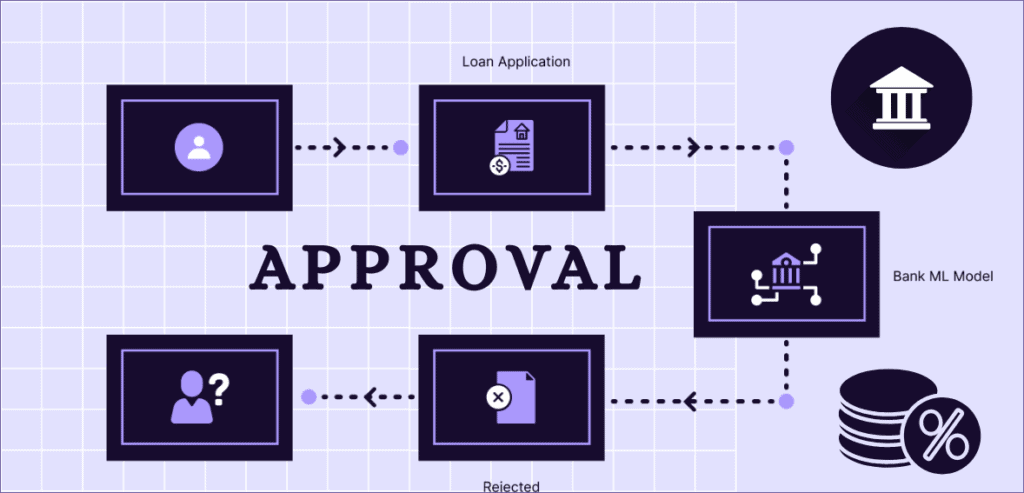
Approval-lift signals from 3-month vs 6-month bank averages are trend-based indicators, which means they evaluate liquidity consistency and actual financial behaviour over the defined periods, as per the trends. A daily balance or net cash flow aggregation shows whether a borrower’s financial position is stable, improving, or unstable.
Three-month averages primarily focus on recent activities and can capture changes in the business, like income recovery, better expense control, or even temporary shutdowns. On the other hand, six-month averages provide a wider view of the situation by smoothing out fluctuations that are caused by the above financial habits and reflecting such habits.
In combination, these bank average performance metrics provide a layered view that sets up a balance between the two extreme points of view, namely, sensitivity and reliability. This technique enforces the analysis of the loan approval rate by spotting the existing positive momentum without neglecting the longer-term risk aspect; besides, it also backs the financial risk assessment, which applies to the trends. Thus, it goes beyond the static credit snapshots that are drawn from the past.
Also Read: Factor Rate vs APR: Why They Feel Different on Your Cash Flow
Why Lenders Track Approval-Lift Signals from 3-Month vs 6-Month Bank Averages
Approval-lift signals analyzed by lenders using bank averages of 3-month and 6-month time frames are a way to minimize the blind spots that are created by using traditional credit metrics. Credit scores represent previous behaviour but do not show any recent changes in income, spending, or financial stress.
Three-month averages reveal recent advancements or indications of trouble that might not be reflected in bureau data yet. Six-month averages ascertain the permanence of these patterns or their transience. This method of using two different timeframes in measuring bank average performance metrics for responsiveness as well as stability works well.
Looking at the loan approval rate analysis, this results in the issuing of more confident approvals, together with the control of the downside risk. The method being used is in line with the changing trends in the financial risk assessment that put adaptive underwriting over the rigid dependence on scores.
Approval-Lift Signals from 3-Month vs 6-Month Bank Averages in Risk Modelling
In advanced underwriting systems, the signals of approval lift from the three-month compared to the six-month bank averages are considered as dynamic risk inputs instead of static data points. The new models analyze the direction, volatility, and consistency across both time periods.
Three-month averages are quick to respond to income drops or expense increases, and therefore are good for early detection of trends. Six-month averages are good for providing balance, as they exhibit persistent financial behaviour and long-term stability.
When combined, the signals will not only reinforce the overall performance metrics of bank averages but also improve predictive accuracy and minimize the impact of short-term fluctuations. As a result, this method will allow for better loan approval rate analysis and will also assist in changing the direction of financial risk assessment trends that are looking for behaviour-based and adaptive modelling methods.
Comparing Predictive Value of Approval-Lift Signals from 3-Month vs 6-Month Bank Averages

The choice of whether to use 3-month or 6-month bank averages for approval-lift signals is really dependent on the lending purpose and the kind of customer. The short-term trends indicated by the 3-month averages are very reliable signs of the borrowers’ capability to repay in the near future, while the 6-month averages are more related to the borrowers’ creditworthiness throughout the entire loan period.
When both the 3-month and 6-month averages are on the rise, lenders’ confidence in approvals is markedly increased. On the other hand, when the two averages show different trends, the banks get to know the transition risk better, for example, recovery, seasonality, or emerging stress. Hence, they can either change the rates or the terms instead of facing one or the other (good or bad) approval decision.
The bank average evaluation using both periods improves performance metrics and brings the loan approval rates analysis into focus, in a manner consistent with the ongoing financial risk assessment trends, which promote multi-period alignment and hence area of lesser risk vs. more risk clearly.
Operational Use of Approval-Lift Signals from 3-Month vs 6-Month Bank Averages
Effective use of approval-lift signals from 3-month vs 6-month bank averages requires clear policy definitions and consistent workflow integration. Lenders must specify how each timeframe influences eligibility thresholds, pricing, and exception handling.
Typically:
- Three-month averages act as early qualification or risk-detection signals
- Six-month averages validate decision durability and stability
This tiered structure improves efficiency while limiting unnecessary manual reviews. Standardizing these processes strengthens bank average performance metrics, simplifies audits, and improves transparency. Operational alignment ultimately enhances loan approval rate analysis and supports evolving financial risk assessment trends across portfolios.
Approval-Lift Signals from 3-Month vs 6-Month Bank Averages Across Borrower Types
The categorization of borrowers is an essential aspect of understanding approval-lift signals from 3-month vs 6-month bank averages. The way people get paid is one of the main factors affecting their use of money, and that is why one period for evaluation is not enough.
- Salaried borrowers often benefit from six-month averages that reflect stable income
- Freelancers and gig workers may show stronger signals in three-month averages
- Seasonal businesses require context to avoid distorted short-term performance
Had the analyses been done differently according to borrower types, banks would have seen the average performance metrics for their loans go up, and the risk of misclassification would have also gone down. This would allow a more reliable analysis of business loan approvals and be in line with the current financial risk assessment trends that are concentrated on individualized underwriting.
Regulatory and Compliance Implications of Approval-Lift Signals from 3-Month vs 6-Month Bank Averages

From a compliance standpoint, approval-lift signals from 3-month vs 6-month bank averages boost transparency and explainability in credit decisions. The regulators are demanding that the lenders provide more and more to substantiate their decisions using clear and data-driven reasoning.
Since the bank averages are easily measurable and auditable, they can be considered as an indicator of fair-lending compliance and strong model governance. Banks and other financial institutions can then document the different impacts of the timeframes and thus be in a position to explain the decisions to regulators, auditors, and borrowers in a very clear manner.
This has the effect of making the bank averages performance metrics stronger, allowing a more rigorous analysis of the loan approval rates, which is in line with the current trends in financial risk assessment, focusing on accountability and data integrity.
Strategic Value of Approval-Lift Signals from 3-Month vs 6-Month Bank Averages
The adaptability factor represents the long-term strategic value of approval-lift signals from 3-month vs 6-month bank averages. The risks related to lending are not taken care of with slower, gradual measures, as lenders quickly adapt to changes in the economy through these metrics.
Agility during financial changes is provided by the shorter averages, while the longer averages keep decisions steady in uncertain times. In unison, they not only improve bank average performance metrics but also assist in the analysis of sustainable loan approval rates.
When it comes to financial risk assessment, the trend is still moving towards the use of real-time and explainable data, and this dual-window strategy will be one of the primary advantages for scalable lending.
Conclusion
The combination of approval-lift signals from 3-month vs 6-month bank averages is the mainstay of today’s credit decisioning since it brings about a responsive yet stable approach. The combination of both gives a more precise and clearer view of borrowers’ activities when compared with traditional credit metrics alone.
Instead of choosing just one period, the best lenders use both to form a single underwriting approach. This method of giving equal weight has the effect of boosting confidence in approvals, lowering the rate of unexpected defaults, and allowing the continuous growth of portfolios. On the other hand, this method is in line with the prevailing financial risk assessment that gives importance to behavioural data, the making of disclosures, and the adoption of change.
As the lending models go more and more data-centric, the use of approval-lift signals among different time periods will not be a thing of the past. Banks that follow this path will be the ones with better performance, stronger resilience, and good credit quality over the long term.
FAQs
What are the approval-lift signals from 3-month vs 6-month bank averages?
They measure how short-term and mid-term bank balance trends influence approval outcomes, helping lenders assess recent momentum alongside sustained stability.
Which timeframe is better for loan approval rate analysis?
Neither is universally better. Three-month averages capture recent changes, while six-month averages confirm stability. Using both improves accuracy.
How do bank average performance metrics improve risk assessment?
They reveal real cash-flow behaviour, spending patterns, and liquidity consistency that traditional credit scores often miss.
Do these signals increase approval rates without increasing risk?
Yes, they identify financially improving applicants overlooked by traditional models while maintaining credit quality.
How do approval-lift signals support long-term lending strategies?
They balance agility and control, improve explainability, and align underwriting with evolving financial risk assessment trends.